

SellEasy covers what you expect from a CRM
SellEasy brings together conversations, buyers, history, segments and campaigns so the team has a continuous view of each relationship. That foundation covers an essential part of the work people normally expect from a CRM.
The difference appears when information stops being a record and becomes context for action. In SellEasy, that context also includes catalog, variants, inventory, orders, shipping and returns. That is why we are not a CRM: we cover relationship capabilities, but the word is too small for a platform that can operate across the full commercial journey.
- Contacts and conversations with purchase context.
- Buyer segments for campaigns and follow-up.
- Order, inquiry and team action history.
- Catalog and inventory data available during service.
The difference is where the intelligence lives
This table summarizes the comparison between a traditional relationship tool and a platform designed from the start for AI agents. The goal is not only to answer messages; it is to understand the operation’s state and take the next step using clear rules.
Summary comparison of capabilities for a retail operation.
| Capability | Traditional CRM | SellEasy |
|---|---|---|
| Organize contacts and conversations | Centralizes records, activities and follow-ups. | Centralizes conversations, purchases, activity and operational context. |
| Sell through conversation | Responds or routes; selling often needs additional processes and tools. | LoBot understands the catalog, variants and availability, recommends and prepares the next order step. |
| Operate inventory | Inventory usually lives in the commerce platform or separate integrations. | Connects catalog, variants, warehouses, channels and movements to check availability. |
| Dispatch and manage returns | Coordinated through tickets, tasks or integrations. | Organizes order states, shipping, tracking and returns with team confirmation. |
| AI agents | Added on top of a structure designed for records, tickets and automations. | Sales, logistics, analytics, marketing and coordination agents share the brand’s context. |
| Scale scenarios | Each exception often becomes a separate automation, integration or development task. | Steps and states are legible to agents: they identify context, constraints and the next action. |
| Human approvals | Configured as separate tasks or workflows. | The agent proposes; your team approves payments, dispatches and sensitive changes. |
Infrastructure designed for agents
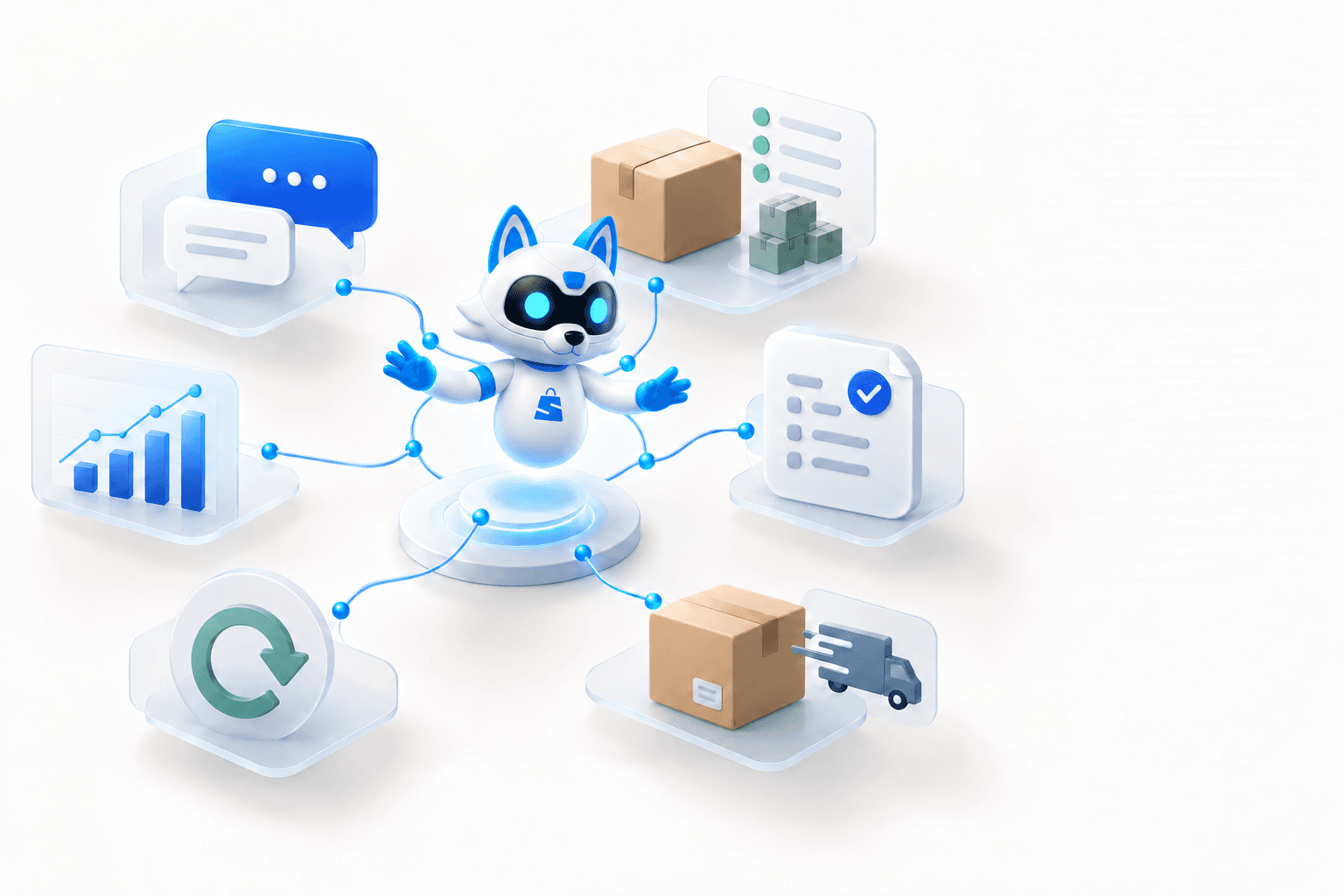
The difference is not only adding a chatbot. From the start, SellEasy was built around agents that work in harmony: each receives the brand’s context, reads the operation’s state and knows which step it can take.
Orders, inventory, shipping, returns, buyers and campaigns are not isolated boxes. They are states and events agents can interpret. If information is missing, they ask for it; if there is an exception, they escalate it; if the next step needs approval, they wait for the team’s decision.
A pre-AI CRM can be useful for organizing relationships, but when asked to sell, dispatch, analyze and choose between scenarios it is limited by its model: records, tasks and isolated automations. The architecture determines what an agent can understand and execute.
CRM is a capability, not the platform’s limit
That is why SellEasy covers the work expected from a CRM without defining itself as one. The question is no longer where to store a contact, but what the system can do with that context.
The CRM category becomes too small when a platform can read intent, check availability, move an order to its next state, prepare a campaign, detect low inventory and ask for approval at the right moment.
- Reads context before acting.
- Checks the right source for each piece of data.
- Chooses the next step among possible scenarios.
- Leaves an action the team can understand.
How to choose for your operation
A traditional CRM can fit when the main work is managing long B2B cycles, content, landing pages, SEO or large ticket teams. An agent platform is a stronger fit when conversations are sales and must continue into inventory, orders, dispatch, returns and analytics.
If you already use a CRM, you do not need to replace it overnight. It can keep supporting content, reporting or corporate workflows while SellEasy operates the store context and conversational channels. The decision depends on where you need the system to act, not only where it stores data.